
HDD Expertise
Unrivalled experience on HDD jobsites
OPTIMUM’s HDD expertise is built on unrivalled experience in the design and construction of trenchless installations. By integrating the specific constraints of each project – the type of network to be installed, the surrounding infrastructure and underground networks, the available site footprint, and most importantly the nature of the ground – we design HDD crossings that are perfectly suited to the geological and geotechnical conditions of the site.
After the design phase, OPTIMUM supports both project owners and drilling contractors by providing solid technical assistance throughout the construction phase. This includes an active site presence and close supervision of operations at each stage of the HDD process: casing installation (where required), pilot hole, reaming, and pullback operations.
Our engineers monitor key drilling parameters on a daily basis, including torque and drill string pull forces, drilling rate, and drilling fluid behaviour (pressure and circulation of returns), in order to ensure borehole stability, drill path accuracy, and the integrity and safety of the installation, even in the most challenging geological conditions.
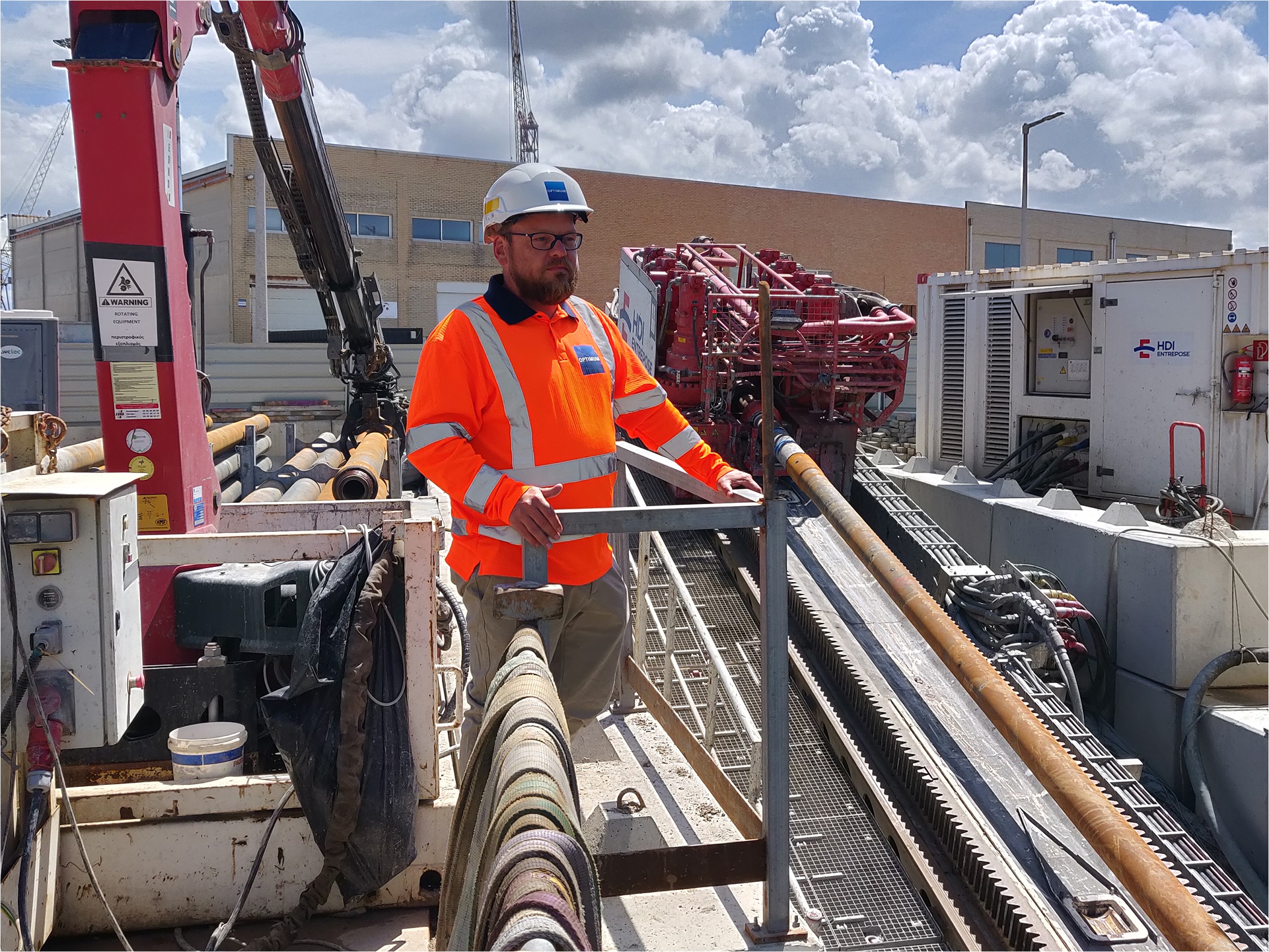
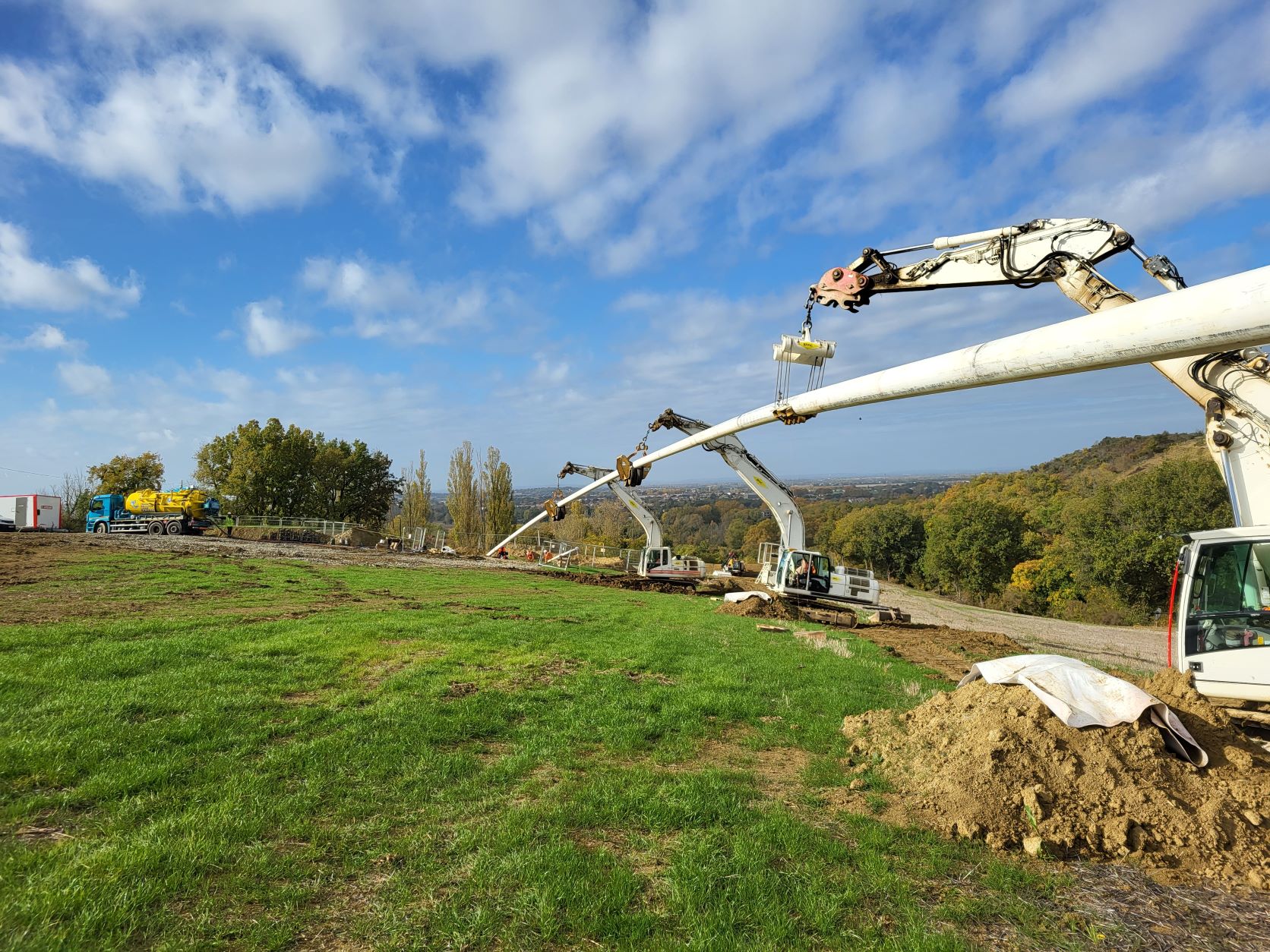
+ 350 HDD projects
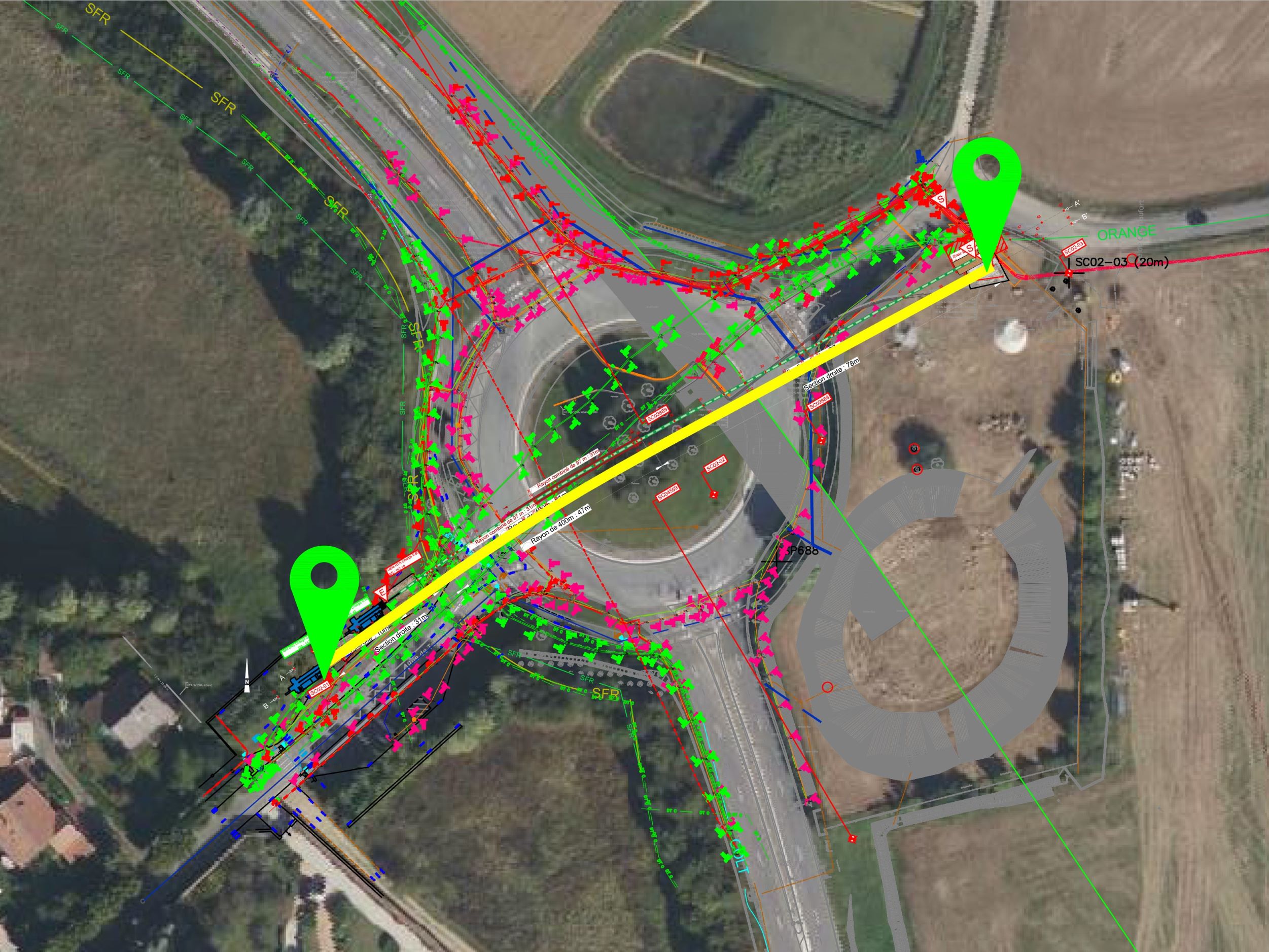
+ 850 HDD crossings
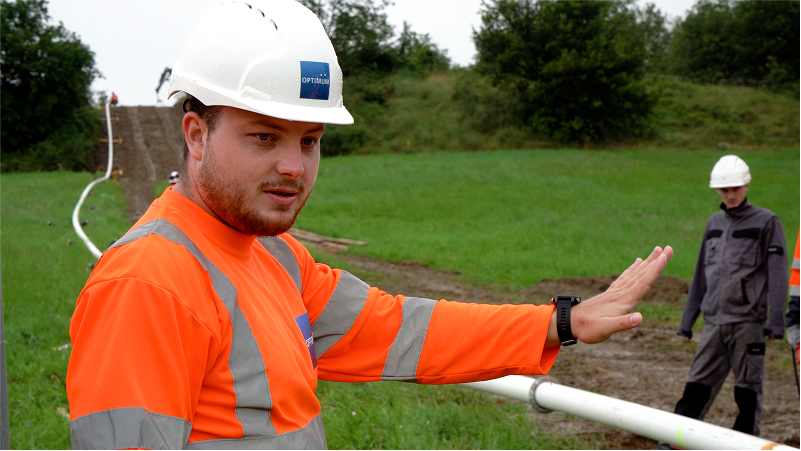
+ 250 000 metres HDD
Horizontal Directional Drilling (HDD)
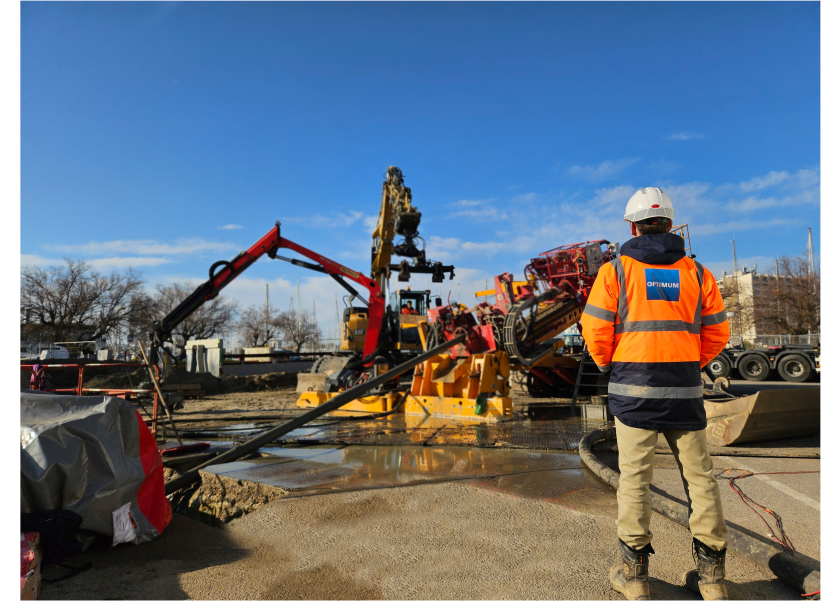
Rapid execution with limited environmental impact
Horizontal Directional Drilling (HDD) often offers the advantage of being quick to implement and cost-effective. HDD is a widely used technique for crossing obstacles such as rivers or roads. It involves drilling directly from the surface of the ground along a predefined, inverted arc-shaped path.
Horizontal Directional Drilling typically proceeds in three stages
Pilot Hole: This creates the drilling profile, one rod at a time, connecting the entry point to the exit point.
Reaming: This expands the diameter of the hole in one or more passes until it is 30% to 50% larger than the pipe or network to be installed. If the pilot hole’s diameter is sufficient, reaming may not be necessary.
Pullback: This is the phase where the pre-assembled pipe or network is pulled into the reamed hole in one continuous section.
Drilling Fluids
A drilling fluid is systematically injected into the drilled hole at each stage of Horizontal Directional Drilling (HDD) (pilot hole, reaming, and pullback operations). This fluid helps lubricate and cool the drilling tools, stabilize the drilled hole, and, most importantly, carry soil debris out of the hole.
The fluid is injected under pressure through rods and exits through the drilling tools inside the hole. It is typically a mixture of fresh water and bentonite, although its composition, quantity, and density can be adjusted based on the soil characteristics and site constraints.
More complex drilling fluids also exist, such as those made from polymers or seawater, which can be especially useful for landfall projects.
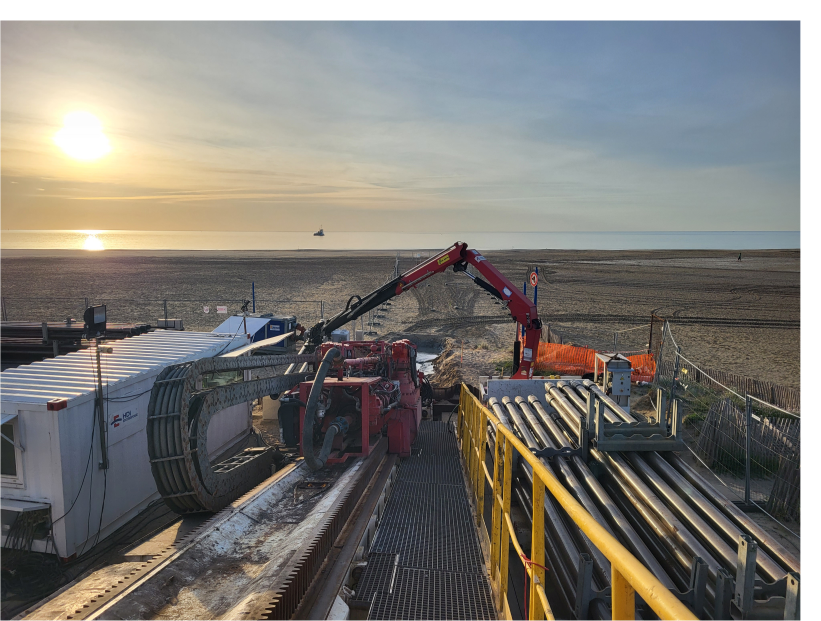
Horizontal Directional Drilling (HDD): At a glance
Advantages
Quick construction
Direct installation of pipelines
Work directly from the surface
Limited environmental impact
Suitable ground conditions
Sands (<2 mm)
Silts
Clays
Homogeneous, unfractured rocks
Dimensions
Diameters from 50mm to 1400mm
Lengths from 10m to 5000m
Lengths from 10m to 5000m
Direct Pipe®
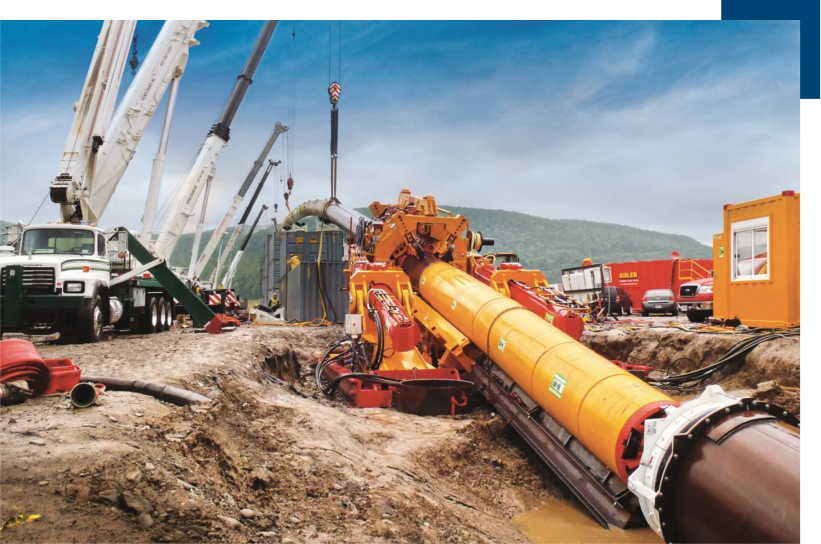
An innovative technique for complex trenchless crossings
Direct Pipe®, by Herrenknecht AG, is an innovative technique that combines the advantages of both Horizontal Directional Drilling (HDD) and microtunnelling. It allows for work to be carried out directly from the surface without the need for deep excavated entry and exit shafts, whilst also benefiting from microtunnelling technology, which enables tunnelling through almost all types of terrain with unmatched precision.
This technique is particularly well-suited for landfall projects as it minimizes offshore mobilisation requirements. It is also relevant for crossings where the geological conditions make HDD implementation unfeasible.
Direct installation by Pipe Thrusters
Direct Pipe allows for the direct installation of steel pipes (coated or uncoated) following an inverted arc profile, similar to those constructed using the HDD technique. The excavation tool connected at the front of the steel pipe is an AVN-type microtunnel boring machine (TBM), while the push force required is transmitted through the steel pipe, pushed from the surface by a Pipe Thruster. Located at the entry point, the Pipe Thruster uses « circular jaws » to grip the steel pipe, in 5-metre sections, and apply a longitudinal push force of up to 750 tons without damaging the pipe. If necessary, multiple Pipe Thrusters can be connected, one behind the other, to increase the push force available.
The steel pipe is assembled at the surface, behind the thrusters, in one or more sections depending on the site conditions, minimizing as far as possible the number of intermediate welds required. In this way, a long Direct Pipe installation can be carried out without having the entire pipe length behind the thrusters at any one time. Each steel pipe section must be pre-equipped with all the necessary connections to operate the microtunnel boring machine (energy, marine lines, lubrication, communication, etc.).
Finally, the steel pipe installed by Direct Pipe can serve as either the final structure or as a casing for networks installed inside it.
Direct Pipe : At a glance
Advantages
Work directly from the surface
High thrust force capacity
Adaptable for all ground conditions
Pipe stability
Reduced jobsite surface
Suitable ground conditions
All ground conditions
Dimensions
Diameters from DN750 to DN1500 (30″ to 60″)
Length from 400m to 2000m